
Is Real Estate in Jardin, Antioquia a Good Investment? Market Analysis [2026]
- Juan Valdez
- Jun 24
- 13 min read
![Is Real Estate in Jardin, Antioquia a Good Investment? Market Analysis [2026]](https://static.wixstatic.com/media/fe33c5_d32cf31fb8eb4dbfa45162310bf463b7~mv2.jpg/v1/fill/w_720,h_817,al_c,q_85,enc_avif,quality_auto/fe33c5_d32cf31fb8eb4dbfa45162310bf463b7~mv2.jpg)
Is Real Estate in Jardin, Antioquia a Good Investment? Market Analysis [2026]
The global real estate market is undergoing a period of profound structural reconfiguration. Private capital, burdened by saturation, restrictive regulations, and sky-high costs per square meter in traditional urban centers of North America and Europe, is actively moving toward alternative assets in highly resilient emerging markets. In the context of Latin America, Colombia stands out singularly thanks to a particular combination of recovering macroeconomic stability, consolidated legal frameworks for private property, and a currency asymmetry that extraordinarily favors those with investment capital denominated in strong currencies.
Within this vast territory of opportunities, the department of Antioquia has historically led industrial, technological, and real estate development. However, while the Aburrá Valley and the nearby East experience dynamics of accelerated urban densification, an enclave of exceptional value in Southwestern Antioquia captures the priority attention of sophisticated international buyers, retirees, and niche investment funds.
Jardín, a municipality deeply rooted in the region's coffee culture, is no longer just a destination for ecological and contemplative tourism. In the current landscape, it stands as one of the rural and semi-rural real estate investment frontiers with the highest projection of capital appreciation and asset solidity in the entire country. As a marketing strategist and analyst of the regional real estate landscape, I have observed the evolution of this market and can affirm that we are facing a unique window of opportunity, characterized by a booming international demand and a land supply strictly limited by geographical and regulatory reasons.
The following is an exhaustive breakdown of the economic variables, connectivity infrastructure transformations, the most dynamic asset typologies, and the essential legal security considerations that define investment in this corner of Southwestern Antioquia. Is Real Estate in Jardin, Antioquia a Good Investment? Market Analysis [2026]
The Environment and the Intrinsic Appeal of Jardín
Understanding the behavior of the real estate market in Jardín requires looking beyond conventional financial indicators and delving into its unique structural elements. Jardín is part of Colombia's prestigious Network of Heritage Towns (Red de Pueblos Patrimonio). This governmental distinction is not a mere cosmetic title; it implies a strict regulatory framework co-administered by local and national authorities for the absolute preservation of colonial architecture, the historic urban layout, and the surrounding landscape.
For a real estate buyer, this regulatory shield represents a guarantee of long-term value stability. In unplanned tourism markets, chaotic growth and unbridled construction usually saturate public services, destroy the local aesthetic, and eventually depress the value of premium residential properties. In Jardín, height restrictions, the mandatory preservation of traditional brightly colored facades and wooden balconies, and severe limitations on new massive urban developments in the urban core create a scenario of artificial scarcity induced by law. Buildable land in the central perimeter is a finite resource, which pushes prices upward organically as demand increases.
Geographically, the municipality is situated at an average elevation of 1,750 meters above sea level, nestled in a transition zone of the Andes mountain range. This altitude grants it an exceptional microclimate, with constant average temperatures ranging between 18°C and 23°C. In an era marked by global climate change and rising energy costs, the lack of any need for heating or air conditioning ostensibly reduces the operational maintenance costs of any building—a factor of high weight for global retirees and eco-conscious project developers.
Macroeconomic Indicators and Real Estate Market Trends
The Colombian macroeconomic context shows signs of monetary stabilization that boost real estate businesses. After a period of contraction in national residential sales volume due to the restrictive interest rates of preceding years, projections for the coming months point to a general acceleration of 11.5% in housing project sales, especially in the premium, non-subsidized segments.
Inflation in Colombia has continued its path of convergence toward the target ranges of the Central Bank (Banco de la República), sitting at more manageable levels around 4.0% or 4.5%. This deceleration has led to a gradual easing of monetary policy, which translates into more competitive mortgage and commercial financing interest rates for domestic and corporate buyers.
Market Variable | Regional Trend in Antioquia | Specific Impact in Jardín |
Price Growth | Nominal annual increase of 8% to 10% | Upward pressure on traditional farms and country lots due to supply scarcity. |
Asset Preference | Marked preference for country houses and rural farms | Increase in the value of the rural square meter in tourist veredas (sectors). |
Currency Dynamics | Competitive devaluation of the Colombian Peso (COP) | Substantial increase in the purchasing power of investors in USD or EUR. |
Local Regulation | Density restrictions and architectural protection | Conservation of the residential environment and assurance of capital gains. |
While the value per square meter in the most sought-after urban districts of Medellín shows a trend toward stabilization due to an increase in inventory turnover times, country properties and production farms in Antioquia's subregions lead the departmental appreciation indices. The migration of independent professionals and international buyers seeking a lifestyle change toward environments with clean air and low population density sustains robust demand.
In Jardín, real estate values have shown sustained growth, driven by interest from North American and European capital, as well as the growing community of digital nomads who operate remotely, taking advantage of the progressive arrival of high-speed fiber-optic internet networks in the municipality.
Connectivity Infrastructure as a Value Catalyst
Historically, Southwestern Antioquia presented a relative geographical isolation due to the complex topography of the Andean mountain range. Traveling from the department's capital to Jardín involved journeys of more than four hours on single-lane roads prone to delays due to climatic factors. This physical barrier acted as a brake on large-scale real estate development and limited the use of these lands as weekend second homes for inhabitants of metropolitan areas.
This connectivity paradigm has been radically transformed by the full operational implementation of the Fourth Generation (4G) highways, specifically the Pacífico 1 and Pacífico 2 mega-road projects. These formidable road works, which include state-of-the-art tunnels, large viaducts, and extensive double-carriageway sections, have directly connected central Antioquia with the Coffee Axis and the port terminals of the Colombian Pacific.
As a direct consequence, road travel time from Medellín to Jardín has been optimized ostensibly, currently standing at just over three hours under normal traffic conditions. This drastic reduction in times not only facilitates the continuous flow of domestic visitors but also alters the economic equation of rural land. Properties in Jardín are now perfectly viable for mixed-use schemes: permanent residences for global professionals, easily accessible second homes for high-income families from Medellín, or boutique hotel accommodation enclaves with stable occupancy rates during weekdays.
The road improvement acts as a driver for appreciation, closing the existing price gap between Southwestern lands and the highly valued areas of Eastern Antioquia.
The Agricultural Sector: Production Farms as Wealth Preservation Assets
For capital allocators contemplating the rural real estate market in Colombia with a long-term wealth preservation perspective, Jardín offers extraordinary options in the productive agricultural land segment. The municipality's geography is blessed with volcanic soil compositions rich in organic matter, a predictable bimodal rainfall regime, and a thermal gradation that favors highly specialized crops.
The acquisition of traditional farms in this area allows investors to structure a highly resilient hybrid business model. Instead of depending on the fluctuations of purely speculative real estate markets, owners can maintain active agricultural operations focused on high-value niches, such as single-origin specialty coffee with differentiated cup profiles, or fruits in high international demand.
+------------------------------------------------------------------------+
|                      ESSENTIAL AGRICULTURAL METRICS                    |
+------------------------------------+-----------------------------------+
| Productive Altitude Range          | 1,600 to 2,100 meters above sea   |
+------------------------------------+-----------------------------------+
| Terrain Composition                | Andean soils derived from deep    |
|                                    | volcanic ash                      |
+------------------------------------+-----------------------------------+
| Specialty Coffee Varieties         | Castillo, Colombia, Caturra,      |
|                                    | Geisha, and Bourbon               |
+------------------------------------+-----------------------------------+
| Commercialization Channels         | Direct export to roasters,        |
|                                    | high-specialty micro-lots         |
+------------------------------------+-----------------------------------+
This model allows for the generation of operational cash flows indirectly denominated in foreign currencies through direct export contracts with boutique roasters abroad, while local labor and input operating costs are settled in the local national currency.
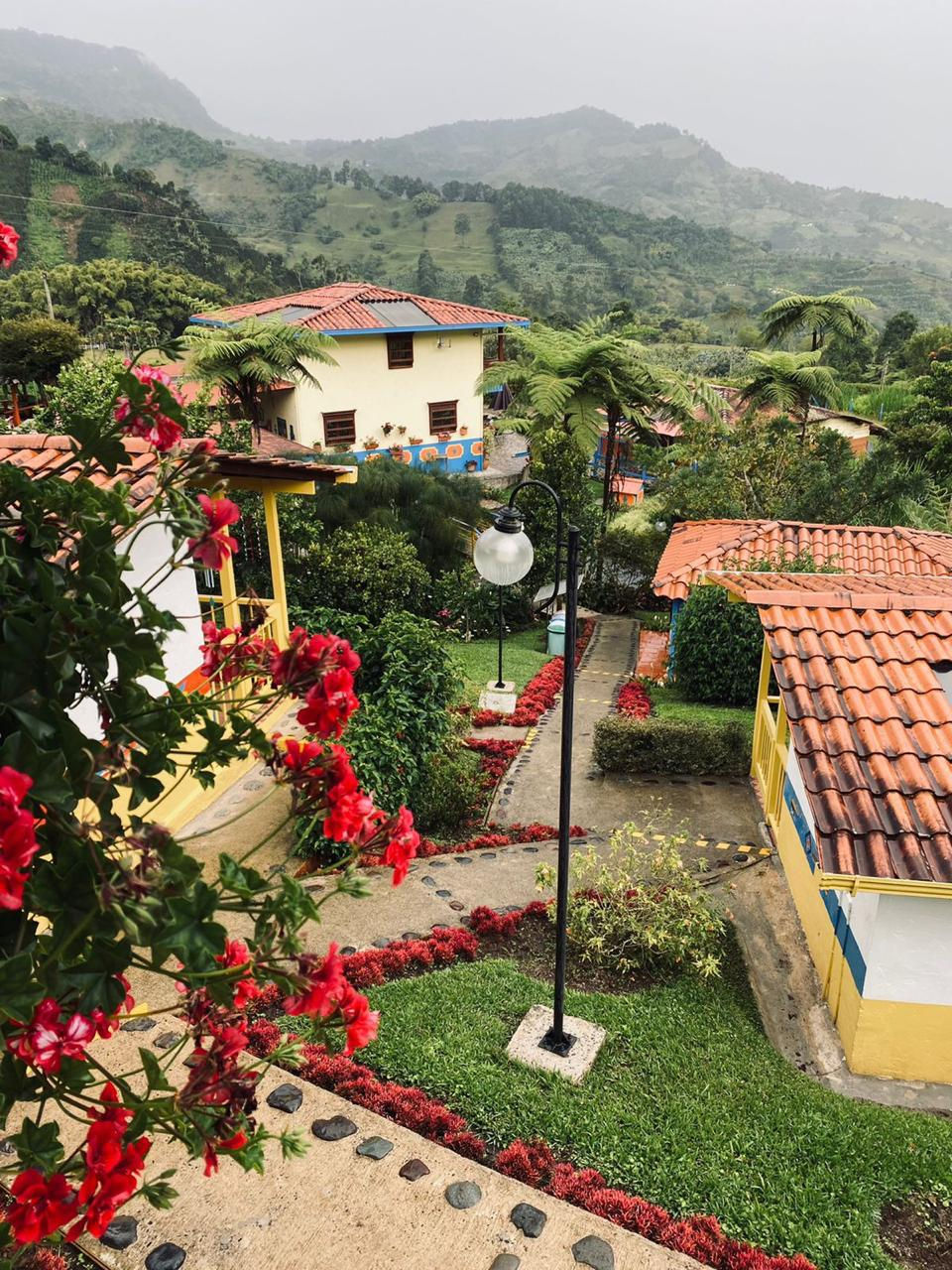
Additionally, the traditional architectural design of the region's large coffee estate houses—with their wide corridors, high clay-tile roofs, and noble wood structures—lends itself naturally to luxury architectural restoration processes. These properties can simultaneously host automated agricultural operations and high-end hospitality developments, such as eco-lodges, coffee culture immersion experiences, or corporate and wellness retreats, optimizing the property's comprehensive yield per hectare.
Key Segments of the Real Estate Market in Jardín
The real estate asset portfolio in Jardín is divided into three major categories that respond to different strategic investment objectives:
Residential Properties in the Urban Core and Historic Conservation
The traditional center of Jardín is characterized by an impeccable colonial grid centered on a main square declared a National Monument. Properties located within this radius are highly valued for commercial conversion. Old houses with spacious colonial internal courtyards are systematically acquired by investors to be transformed into signature hotels, art galleries, gourmet cafés, and signature restaurants. The absolute limitation of space in this urban core guarantees that the value of well-maintained historical structures increases in the face of the incessant influx of tourists and foreign buyers looking to settle in the cultural heart of the town.
Country Lots and Low-Density Subdivisions
On the hillsides immediate to the urban perimeter, in veredas (rural sectors) recognized for their safety and scenic beauty, a dynamic market of country subdivisions has consolidated. Buyers generally acquire independent lots ranging between 2,000 and 6,000 square meters to build modern residences that harmonize with the natural environment. Rural residential projects that incorporate sustainability elements from their conception—such as rainwater harvesting, integrated solar energy systems, and local construction materials with a low carbon footprint—manage to capture substantial price premiums due to international buyers' high preference for ecological autonomy.
Recreational Farms and Boutique Hotel Complexes
The growing influx of high-purchasing-power travelers seeking personalized experiences away from mass tourism centers has generated a chronic deficit of luxury hotel infrastructure in the municipality.
Large traditional recreational farms located in accessible peripheral zones are being reconfigured under models of corporate hospitality or small-scale wellness resorts. The incorporation of advanced concepts such as high-end glamping, villas integrated into the mountain topography, and ecological spas allows for highly competitive nightly rates in the international market, far exceeding the returns of traditional volume hospitality.
Legal Framework and Legal Security Considerations for Buyers
The Colombian legal system offers a solid and transparent system for protecting private property, shielding the rights of both domestic and foreign citizens equally. There are no legal limitations preventing a foreign natural or legal person from holding full title over rural or urban real estate in the country. However, being a market with predominantly rural and historical characteristics, the acquisition process requires strict compliance with legal due diligence protocols to mitigate any operational risk.
A secure purchase process within the national territory requires the mandatory execution of an exhaustive title search (estudio de títulos). This legal procedure, carried out by professional real estate attorneys, consists of a detailed review of the history of transfers, liens, and legal annotations reflected in the property's Certificate of Tradition and Freedom (Certificado de Tradición y Libertad) for a retrospective historical period of no less than ten years.
This analysis makes it possible to verify the absence of fraudulent documentation in the previous chain of ownership, mortgages pending cancellation, active judicial foreclosures, family inheritance disputes, or encumbrances from land restitution regulations. Likewise, it is vital to check the physical reality of the property against the geographical boundaries registered in the public deeds and the databases of the Agustín Codazzi Geographic Institute (IGAC) to avoid boundary discrepancies.
+------------------------------------------------------------------------+
|                     EXCHANGE SECURITY PROTOCOLS                        |
+------------------------------------------------------------------------+
| 1. Opening a local bank account or using coverage accounts             |
+------------------------------------------------------------------------+
| 2. Mandatory channeling of foreign currency via Exchange Intermediary  |
+------------------------------------------------------------------------+
| 3. Filling out and filing the Exchange Form of the Central Bank to     |
|    formalize the registration of Foreign Investment                    |
+------------------------------------------------------------------------+
| 4. Issuance of the official registration certificate of foreign capital|
+------------------------------------------------------------------------+
Equally critical is the environmental zoning and urban planning component. Since Jardín is a territory with significant water reserves, forest preservation areas, and a rigorous heritage protection status, land uses are severely delimited by the municipality's Land Management Framework (EOT - Esquema de Ordenamiento Territorial). Buying rural land with the expectation of developing a hotel complex or a residential subdivision without first verifying the permitted occupancy coefficients, construction restrictions near natural water sources, and the actual availability of public utilities can indefinitely paralyze an investment project.
For the international buyer, a highly relevant regulatory incentive is direct access to preferential immigration status policies through real estate investment. Colombia's immigration laws stipulate that a foreign citizen who makes a direct investment in real estate for an amount that exceeds the thresholds set by the ministry is fully eligible to apply for a Migrant Category M-10 Real Estate Investor Visa.
This investment limit is anchored to the amount of monthly legal minimum wages established by the national government. For the year 2026, the monthly legal minimum wage is set at 1,750,905 Colombian Pesos. The regulation requires that the real estate investment formally registered in the public deed be equal to or greater than 350 monthly minimum wages, which represents a base amount of approximately 612,816,750 Colombian Pesos.
The successful attainment of this visa, which has a renewable three-year validity and opens the doors to obtaining permanent residency, is strictly conditioned on transparency in the monetization of resources. All funds coming from abroad must be brought into the country through authorized foreign exchange market intermediaries (commercial banking entities) and be formally registered with the Central Bank (Banco de la República) under foreign direct investment exchange codes. This legal procedure not only grants full immigration regularity but also ensures the unconditional right to the future repatriation of capital and profits in foreign currency free of regulatory setbacks.
Strategic Advantages of Our Real Estate Management
Navigating a traditional and rural property market like that of Southwestern Antioquia requires a specialized operational infrastructure, an intimate knowledge of the local community's idiosyncrasies, and the deployment of cutting-edge commercial methodologies. The most valuable real estate transactions in these areas are frequently not available on mass distribution channels or standard generic listing websites.
At Jardín Colombia Real Estate, we position ourselves as the ideal strategic partner for structuring your real estate business in the region. We do not operate as passive traditional brokerage agencies; we bring a fresh and analytical perspective based on updated market data, advanced analytical skills, and specialized teams of professionals dedicated exclusively to legal due diligence, technical development, and rural landscape architecture.
We have the most outstanding portfolio of exclusive properties in Jardín and the most sought-after locations in Antioquia, meticulously selected for their appreciation potential, soil qualities, and regulatory feasibility for the development of high-end residential or commercial projects. Through the provision of high-precision outsourced marketing services, we efficiently connect the local supply of premium land with networks of sophisticated international capital.
Our methodology focuses on assisting companies, private funds, and individual buyers to mitigate operational risks, optimize acquisition structures, and maximize the return on their real estate investments in Antioquia. We provide comprehensive support that covers everything from the initial title search to the conceptual and commercial design of tourism or agricultural projects, ensuring that each transaction is executed with the highest global corporate standards.
Market Balance in Jardín
By analyzing the exposed variables in an integrated manner, it can be rigorously concluded that the real estate sector in Jardín, Antioquia, represents a solid investment alternative with low structural risk and a highly positive appreciation projection for the year 2026 and the coming decades.
The municipality has left behind the stage where it depended exclusively on domestic economic cycles to firmly insert itself into international circuits of luxury tourism, wellness retreats, and high-purchasing-power residential migration. The convergence between a 4G road infrastructure that permanently reduces travel times from Medellín, a strict heritage conservation legal framework that prohibits destructive construction oversupply, and a highly competitive local currency for foreign currency holders configures an asymmetric investment environment extremely favorable to the buyer.
Real estate assets in this subregion not only function as efficient wealth preservation mechanisms against inflationary pressures in developed economies, but they also offer the capacity to generate operational cash flows through hybrid exploitation models that combine automated export agriculture with international boutique hospitality. For investors with a strategic vision who prioritize legal security, the exclusivity of the natural environment, and the real value of land scarcity, Jardín consolidates itself as one of the most outstanding choices in today's Latin American geography.
Conclusion
The acquisition of real estate in Jardín constitutes a strategic financial decision backed by solid economic, structural, and demographic fundamentals. The transformation of transportation infrastructure in Antioquia has definitively eliminated old access barriers, allowing the exceptional cultural, climatic, and natural wealth of this heritage town to be leveraged to its maximum commercial potential by investors from all over the world.
Whether your investment vision is oriented toward acquiring traditional coffee farms with agro-tourism potential, developing country lots with high standards of sustainable design, or converting historic colonial buildings in the urban center for premium commercial uses, the Jardín market offers a scarce value scenario in today's global landscape. Acting with the advice of a professional team with experience on the ground, advanced technical capacity, and a deep understanding of local regulatory frameworks is the indispensable key to ensuring a smooth, secure transaction oriented toward generating sustainable value over time.
We cordially invite you to explore our exclusive selection of premium real estate opportunities by visiting our official website at https://www.jardincocolombiarealestate.com , where our team of experts is ready to provide you with a new perspective and rigorously guide you in achieving your investment goals in Southwestern Antioquia.
Frequently Asked Questions
What legal protections shield foreign buyers investing in real estate in Jardín?
Foreign citizens enjoy the same constitutional rights and legal protections as Colombian nationals when acquiring real estate in the country. The Colombian State guarantees private property unrestrictedly, allowing foreigners to register full ownership titles in their personal name or through local or external corporate structures, using only their valid passport as a legal identification document to finalize the transaction before a public notary.
In what way does the 4G highway infrastructure impact the value appreciation of properties in Southwestern Antioquia?
Fourth-Generation road projects, specifically Pacífico 1 and Pacífico 2, have permanently transformed the accessibility of the region by replacing old mountainous roads with dual carriageways, advanced tunnels, and viaducts. This has reduced vehicle travel time between the Aburrá Valley and Jardín to an average of three hours. This accelerated connectivity directly increases the demand for second homes, digital nomads, and international tourism, driving land value appreciation by integrating it functionally with the economic dynamics of Medellín and international airports.
What are the indispensable monetary and regulatory conditions to obtain a real estate investor visa in Colombia?
To access a Category M-10 Migrant Visa for investment in real estate, the foreign applicant must demonstrate the acquisition of one or more properties with a total consolidated value in the public purchase deed equivalent to or greater than 350 monthly legal minimum wages. For the current annual cycle, this financial base sits at approximately 612,816,750 Colombian Pesos. It is a mandatory legal requirement that the capital comes directly from abroad and is monetized through the formal exchange market, registering the operation with the Central Bank to validate the immigration application.
What does a due diligence process or title search for rural lands and coffee farms consist of?
A title search is a mandatory legal audit conducted by real estate law professionals that involves a thorough analysis of all legal acts, transfers, mortgages, liens, or successions registered on the property's Certificate of Tradition and Freedom for a minimum interval of ten years into the past. This procedure certifies the legal purity of the property title, validating that the seller has the exclusive legal authority to transfer ownership and discarding active lawsuits, environmental zoning restrictions, or land claims that could compromise the investment.
Why do the architectural restrictions of Jardín's historic center benefit real estate investors in the long term?
As a designated Heritage Town, Jardín applies rigorous urban planning regulations that prohibit altering colonial facades, constructing high-rise buildings, and excessive density in its central core. For real estate buyers, this acts as a highly valuable market protection mechanism: it prevents the urban environment's degradation, maintains the municipality's premium tourist appeal, and generates a highly exclusive real estate market where the supply of commercial and historical properties is strictly limited against a growing international demand.
FarmsForSaleInColombia #Colombia #JardinColombia #InvestInColombia #ColombianCoffeeFarmsForSale #ColombianLandForSale #ColombianCoffeeFarmsForSale #CoffeeFarmsForSaleColombia #CoffeeFarmForSaleColombia #CoffeeFarmsInColombiaForSale #FincaForSaleColombia #InvestInColombiaRealEstate #BuyingPropertyInColombia #Colombia


Comments