
How to Start Real Estate Investment in Colombia With Limited Budget
- Juan Valdez
- Jun 30
- 11 min read
How to Start Real Estate Investment in Colombia With Limited Budget
The Colombian real estate environment stands as one of the most vibrant, open, and legally secure markets in Latin America. By offering identical property rights to both international purchasers and native citizens, the country has unlocked a steady stream of global capital into its diverse landscapes. Whether your interest lies in the historical architecture of colonial mountain towns, urban apartments in growing tech hubs, or agricultural parcels tucked away in lush valleys, the structural opportunities here are undeniable.
However, a persistent myth deters many potential buyers: the belief that entering this market requires an enormous pool of initial capital. In truth, navigating the market with a modest budget is not only possible but highly practical if you know where to look and how to structure your acquisitions.
Achieving success with modest capital requires a shift in strategy. Instead of focusing on oversaturated, high-priced urban zones, smart buyers look to emerging destinations, innovative purchasing structures, and local financial instruments designed to protect capital while breaking it into manageable installments. By understanding the mechanics of the local market, you can secure real estate assets in Colombia without overextending your financial resources. How to Start Real Estate Investment in Colombia With Limited Budget
The Preconstruction Advantage and the Fiducia System
For an investor working with a restricted budget, buying a finished property often requires immediate, full capital deployment or complex international wire setups. A far more accessible point of entry is the preconstruction market, locally known as buying sobre planos. This path allows you to leverage time rather than massive upfront cash reserves.
The backbone of this strategy is the Colombian fiducia system. When an individual purchases a preconstruction apartment or townhouse, their funds do not go directly into the bank account of the construction firm. Instead, the entire financial lifecycle of the project is managed by a centralized, state-regulated financial entity known as a sociedad fiduciaria.
[Buyer Installments] ---> [State-Regulated Fiducia] ---> Reaches Sales Equilibrium ---> [Funds Released to Developer]
The fiduciary holds all buyer deposits in a secure escrow account. The developer cannot touch these funds until they have satisfied specific legal and financial conditions, most notably reaching the punto de equilibrio (sales equilibrium). This means a set percentage of the building must be sold, and all municipal environmental and construction licenses must be formally approved before a single peso is released for construction. If the project fails to meet these goals, the fiduciary returns the deposited funds directly to the buyers, drastically reducing the structural risk for small-scale investors.
For those with limited immediate cash, the preconstruction route provides immense flexibility:
Minimal Initial Reservation: Securing a property often requires a reservation fee as low as ten percent to twenty percent of the total purchase price.
Interest-Free Installments: The remaining portion of the down payment, which typically totals around thirty percent of the property value, is divided into predictable monthly payments over the course of the construction phase, which generally spans eighteen to thirty-six months.
By utilizing this multi-year window, you can fund your investment out of regular cash flow or external savings without needing a traditional bank loan during the build phase. Once the building receives its final certificate of occupancy, you can either settle the remaining balance in cash or secure a local mortgage if you have established residency and credit history within the country.
Fractional Co-Ownership and Digital Tokenization
As technology increasingly intersects with property management, fractional co-ownership has emerged as a premier tool for retail buyers seeking exposure to premium real estate assets without the matching price tag. This model effectively dismantles the traditional barrier to entry by allowing multiple independent buyers to hold distinct stakes in a single commercial or residential asset.
In a standard fractional arrangement, a specialized property management firm or a financial platform establishes a Sociedad por Acciones Simplificada (S.A.S.), which is the local equivalent of a simplified joint-stock company. This corporation holds the absolute title to a specific high-performing property, such as a vacation rental villa or an urban commercial space. Investors then purchase shares within the S.A.S. proportionate to their available budget.
                           [ SHARED ASSET S.A.S. STRUCTURE ]
                                           |
         +---------------------------------+---------------------------------+
         |                                 |                                 |
         v                                 v                                 v
   [Shareholder A]                   [Shareholder B]                   [Shareholder C]
   Holds 10% Equity                  Holds 25% Equity                  Holds 5% Equity
   Receives 10% Net Yield            Receives 25% Net Yield            Receives 5% Net Yield
This structural breakdown yields clear benefits for the budget-conscious buyer:
Micro-Capital Commitments: Entry points can be remarkably accessible, sometimes requiring under a few thousand dollars to secure a legally deeded share.
Passive Operational Management: The overarching management entity oversees all daily operations, including tenant placement, localized tax compliance, property upkeep, and platform distribution.
Proportional Inflow: All collected net revenues are distributed directly to shareholders based on their ownership percentages, creating an immediate stream of passive income.
A modern evolution of this model is tokenization, where ownership shares are digitally logged on a secure ledger. This infrastructure provides enhanced liquidity, allowing micro-investors to buy or sell their property stakes on secondary digital marketplaces with minimal administrative friction. While you surrender absolute individual control over the layout or immediate use of the physical property, you gain a highly diversified portfolio across multiple geographic sectors with a very modest capital footprint.
Shifting Focus to Emerging Rural Land and Small Parcels
Investors determined to hold full, unshared titles to their real estate assets will find the highest purchasing power by redirecting their gaze away from primary metro areas and toward the expansive rural landscapes of the country. While urban land values in premier neighborhoods command premium prices per square meter, agricultural and semi-rural regions offer massive expanses of fertile land at a fraction of the cost.
This approach involves seeking out regions experiencing shifts in structural accessibility, eco-tourism growth, or specialized agricultural production. Acquiring land in these pockets allows you to buy into the path of long-term regional development while keeping your initial purchase price low.
When evaluating agricultural plots or looking at options like FarmsForSaleInColombia, navigating the regional due diligence process with extreme care is paramount. Rural land transactions require extra steps to ensure your title is clear and fully protected.
                        [ RURAL DUE DILIGENCE CHECKLIST ]
                                       |
        +------------------------------+------------------------------+
        |                              |                              |
        v                              v                              v
[Tradición y Libertad]       [Municipal POT Review]        [Environmental Clearances]
30-Year Title Search         Verify Rural Zoning           Confirm Natural Water Rights
Check for Historical Liens   Review Building Densities     Validate Autonomous Permissions
Your primary defensive document is the Certificado de Tradición y Libertad. This government-issued document provides a chronological log of every transaction, mortgage, lien, and legal dispute tied to the property. A meticulous review must trace the history back at least thirty years to ensure no unresolved estate distributions, known as sucesiones, or historical claims linger on the title.
Simultaneously, you must cross-reference the land with the local municipal Plan de Ordenamiento Territorial (POT). The POT dictates the specific zoning laws of the region, outlining what percentage of the land can be cleared, what type of structures can be built, and the maximum density allowed per hectare.
For those looking into agricultural land, exploring properties marketed under ColombianCoffeeFarmsForSale can reveal incredibly rich parcels. However, a rural property is only as valuable as its access to resources. Investors must verify the legal water rights of the land, known as a concesión de aguas, which are granted by regional environmental authorities like Corantioquia. Ensuring the property has a certified, legal right to natural water sources protects your land from future environmental or agricultural restrictions, solidifying the long-term utility of your parcel.
The Micro-Renovation and Urban Subletting Model
If your investment goals require you to stay within major urban ecosystems, you can overcome high property prices by adopting a sweat-equity or operational-leasing model. These strategies substitute high capital placement with active market repositioning and management.
The first urban path is the micro-renovation, or localized property transformation. This strategy targets older, distressed, or neglected apartments in traditional, middle-class residential sectors, which are designated as Estrato 3 or Estrato 4 in the local socioeconomic classification system. Because these properties often feature outdated layouts, worn interiors, or cosmetic deficiencies, they frequently sell at a steep discount relative to the surrounding neighborhood average.
[Distressed Urban Unit] ---> [Targeted Visual Upgrade] ---> [Premium Rental Positioning]
By allocating a controlled, modest budget toward high-impact, visual enhancements—such as installing modern cabinetry, updating bathroom fixtures, applying fresh paint, and optimizing lighting—you can rapidly elevate the market value of the unit. This transformation allows you to either flip the asset for a prompt return or list it on long-term rental networks at a premium price point.
The second urban framework is corporate or co-living subletting, which completely bypasses the need to purchase the underlying brick-and-mortar asset. Under this system, you secure a multi-year lease on a spacious, well-located apartment, ensuring the contract features an explicit, legally binding clause that permits subleasing.
Once the lease is signed, you furnish, style, and divide the space into optimized individual rooms or collaborative working areas. By marketing these rooms directly to digital nomads, international students, or young professionals, the total income generated across the individual rooms can significantly exceed your master lease payment, leaving you with a consistent, low-overhead monthly operational profit.
Transaction Optimization and Cost Mitigation Strategies
When operating with a lean investment budget, unexpected closing costs and transaction fees can quickly drain your reserves. Protecting your capital requires managing every administrative step of the purchasing process with high financial efficiency.
Navigating Foreign Exchange Rails
For international buyers, moving capital into the country requires strict adherence to foreign exchange regulations. Every dollar or euro introduced for a real estate transaction must enter through an authorized market intermediary, such as a commercial bank or a specialized foreign exchange brokerage, and must be formally registered with the central bank using a specialized Formulario 4 declaration.
[International Bank] ---> [Specialized FX Brokerage] ---> [Formulario 4 Registration] ---> [Local Seller Escrow]
To optimize this transfer, avoid using standard retail banks for the actual currency conversion. Retail banks frequently charge high transaction fees and offer less favorable exchange rates. Partnering with a dedicated, licensed foreign exchange broker can help you secure highly competitive wholesale conversion rates, saving you substantial amounts on large-scale transfers.
Balancing Closing Costs and Notarial Fees
Closing costs in Colombia generally range between three percent and four percent of the official property value declared on the public deed (escritura). These costs encompass a variety of state and local charges:
Fee Type | Description | Standard Allocation |
Notarial Fees | Charges for the formal drafting and signing of the public deed. | Split evenly (50/50) between buyer and seller. |
Registration Tax | A departmental tax required to record the transfer of ownership. | Typically paid by the buyer, but negotiable. |
Registry Fees | Fees charged by the Office of Public Registry to update the title. | Paid by the party registering the deed (the buyer). |
Retention Tax | A source withholding tax based on the sale price. | Paid entirely by the seller. |
As a budget-conscious investor, you must ensure your formal written purchase offer explicitly states that all standard notarial fees will be split evenly, which is the customary practice in Colombia. Clearly outlining these boundaries protects you from absorbing administrative costs that should legally be covered by the seller.
Realizing Exceptional Value in Southwest Antioquia
To truly maximize a limited real estate budget, you must look beyond highly competitive, saturated metropolitan centers and focus on regions showing strong indicators of structural and economic growth. The Southwest region of Antioquia represents one of the most promising areas for value-driven property acquisition, where accessible land entry points align perfectly with expanding infrastructure and rising interest in eco-tourism.
                           [ REGIONAL ADVANATAGE DEVELOPMENTS ]
                                             |
         +-----------------------------------+-----------------------------------+
         |                                                                       |
         v                                                                       v
[Expanding Infrastructure]                                              [Preserved Eco-Tourism]
Pacifico Highway Networks                                               High International Demand
Reduced Commute Times                                                   Sustainable Growth Focus
Our agency specializes in uncovering unique property listings across the Southwest Antioquia corridor, with an explicit focus on the historic municipality of Jardin. We purposefully step away from generic, high-volume marketing tactics. Instead, we deliver completely fresh perspectives, advanced expert skills, and a highly dedicated, technically precise execution style tailored for both local and international buyers who want to position their capital effectively.
Supported by specialized teams in Colombian real estate law, agricultural development, and foreign exchange compliance, we help businesses achieve greater returns by carefully streamlining every phase of the acquisition lifecycle.
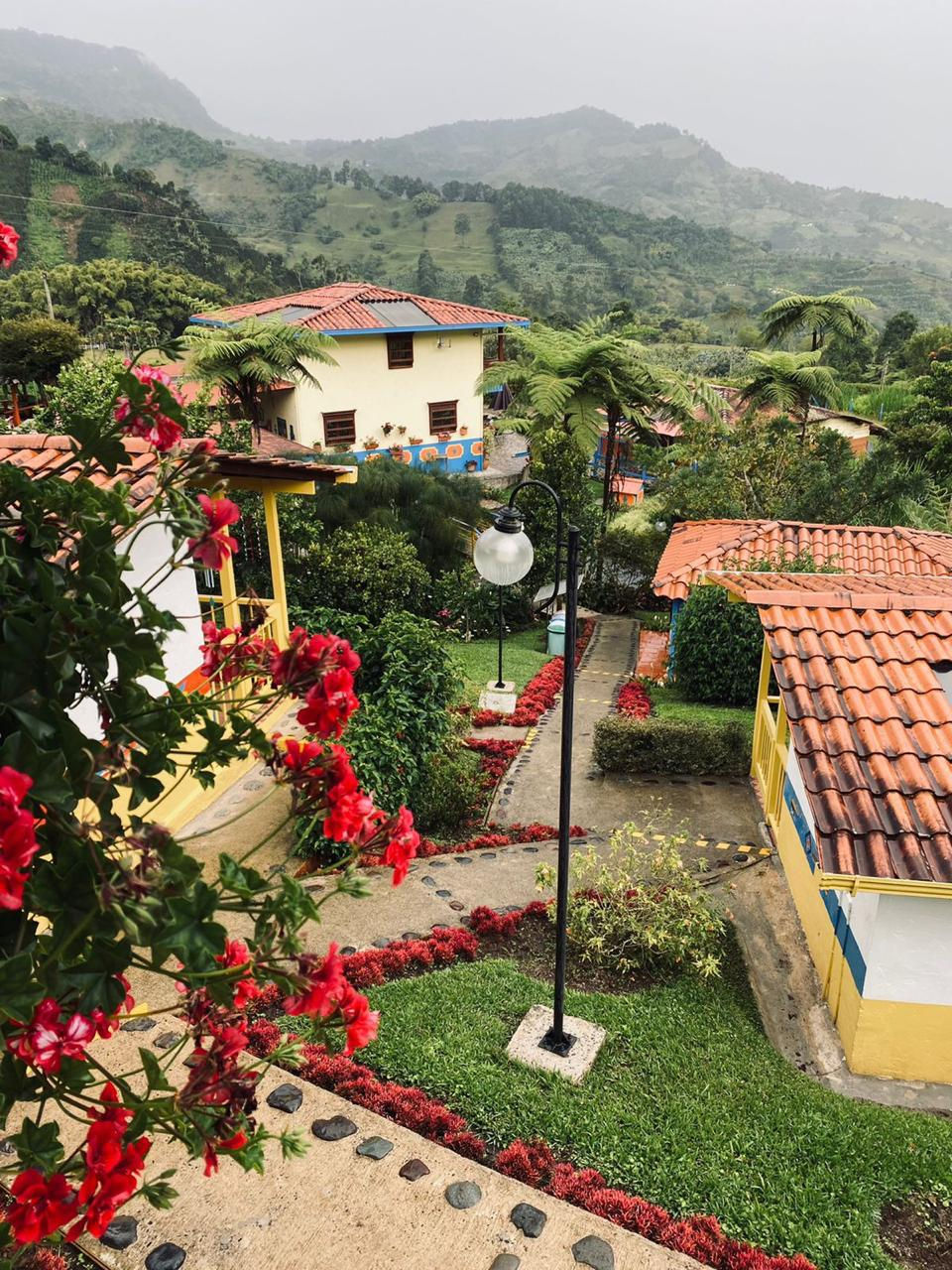
Jardin is universally celebrated for its beautifully preserved colonial architecture, rich coffee heritage, and strict municipal preservation laws that shield the town from unchecked, modern overdevelopment. Through our dedicated localized property portal at https://www.jardincolombiarealestate.com , we grant our clients exclusive access to off-market rural land parcels, traditional colonial townhomes, and compact, productive agricultural holdings that are rarely listed on mainstream public networks.
Furthermore, our fully outsourced marketing services provide property owners with a comprehensive, ready-to-use commercial infrastructure designed to manage, promote, and monetize their assets on a global scale immediately after closing. Aligning with our specialized teams ensures your investment remains fully compliant, operates with maximum efficiency, and stays perfectly positioned to capture long-term regional value.
Conclusion
Stepping into the Colombian real estate market with a limited budget is an achievable goal if you utilize strategic entry points. By shifting away from standard urban purchases and embracing models like interest-free preconstruction installment plans through the fiducia system, fractional co-ownership structures, or target acquisitions in expanding rural corridors, you can establish a secure foothold in this growing economy.
The key to long-term success lies in executing rigorous title due diligence, minimizing transaction and currency conversion fees, and collaborating with local regional experts who understand the on-the-ground dynamics of the market. With the right planning and defensive structures, a modest initial budget can serve as the foundation for a highly profitable, resilient real estate portfolio in Colombia.
FAQs
Can foreign nationals legally purchase and hold title to real estate in Colombia without holding a resident visa?
Yes, foreign nationals enjoy identical legal rights to native citizens when acquiring real estate in Colombia. There is no requirement to hold a local residency visa, establish a domestic corporation, or secure a Colombian business partner to own property. A valid international passport is the only documentation required to execute a purchase contract and hold absolute, fee-simple title to real estate under the frameworks of BuyingPropertyInColombia.
What specific role does a fiducia play in a Colombian preconstruction transaction?
A fiducia acts as an independent, state-regulated escrow and project management entity that protects investor funds during a property's construction phase. The fiduciary secures all buyer installments and prevents the developer from accessing those funds until predefined financial, sales, and legal milestones are met. If the developer fails to achieve these milestones, the fiduciary is legally bound to return the held deposits directly to the buyers, minimizing capital risk.
Is it possible for a non-resident foreigner to open a local bank account in Colombia to manage rental income?
Opening a standard retail checking or savings account can be structurally difficult for non-resident foreigners who do not possess a formal local ID card, known as a cédula de extranjería. However, international real estate investors can effectively manage their capital by opening specialized investment accounts through authorized local brokerage firms or international banks operating within Colombia. These accounts allow owners to legally receive rental payments, settle property taxes, and pay local utilities from abroad.
What are the primary recurring taxes and operational fees associated with property ownership in Colombia?
Property owners are responsible for the annual municipal property tax, known as the Impuesto Predial. This tax varies depending on the specific municipality and the official cadastral valuation of the asset, typically ranging between 0.5% and 1.5% of the property's assessed value. Additionally, if the asset sits within a condominium or managed building, owners must pay a monthly homeowners association fee, known as the administración, to cover communal security, building insurance, and shared maintenance.
How does the local socioeconomic stratification system affect utility costs and property ownership expenses?
Colombia categorizes residential areas into socioeconomic strata numbered from 1 to 6. Lower strata (1 through 3) receive government-subsidized rates on basic utilities, whereas higher strata (5 and 6) pay premium surcharges to help fund those subsidies. For an investor working with a restricted budget, focusing on properties positioned within Stratum 3 or Stratum 4 offers an ideal balance, delivering quality infrastructure alongside highly moderate utility costs and property tax assessments.
What are the core legal requirements for listing a Colombian property on short-term vacation rental platforms?
To legally lease a property on a short-term basis for periods under thirty consecutive days, the property must be registered with the National Tourism Registry, known as the Registro Nacional de Turismo (RNT). This registration is processed online through the Ministry of Commerce, Industry, and Tourism. Furthermore, if the property is located within a residential building governed by horizontal property laws, the building's official bylaws must explicitly permit short-term rental activities.


Comments